
Loud Refrigerator Noise Causes and Fixes in Abilene Homes
A loud refrigerator in an Abilene home is most commonly caused by a struggling evaporator fan, an overworked compressor, a dirty condenser fan, a faulty ice maker, or a vibrating drain pan.
Given Abilene’s intense summer heat — with temperatures regularly pushing past 100°F — local refrigerators work significantly harder than units in cooler climates, which accelerates wear on these components and makes noise problems more frequent.
Most issues can be narrowed down by identifying where the sound is coming from and what type of noise it is.
Why Abilene Homes Deal With Refrigerator Noise More Than Most
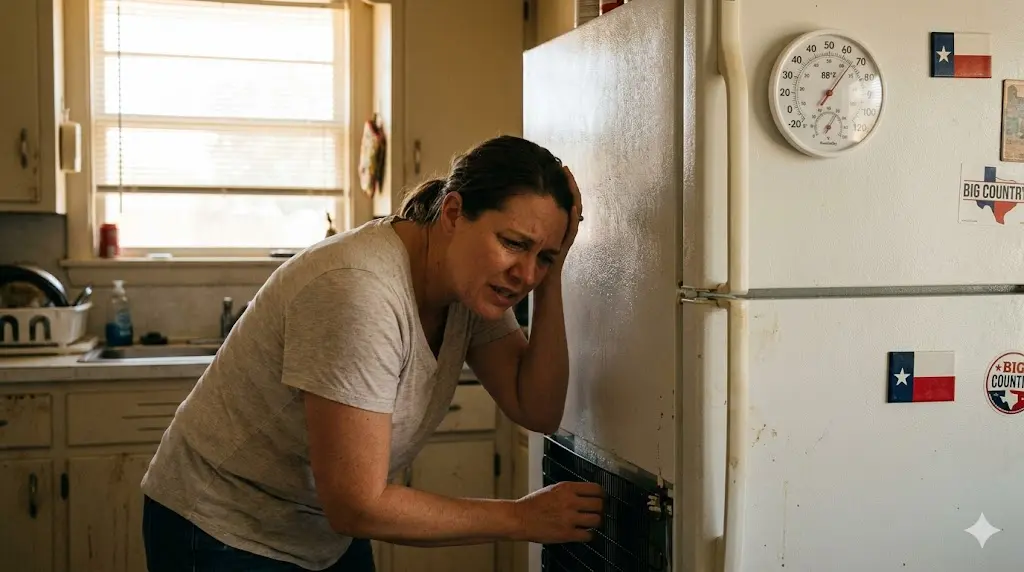
If you live in Abilene, Texas, your refrigerator is quietly working against conditions that most appliance manuals were not written to handle. The Big Country heat is no joke. During peak summer months, outdoor temperatures in Abilene regularly exceed 100°F, and even with central air running, kitchen temperatures in many homes climb well above the ideal 70°F operating range that most refrigerators are designed around.
Here is why that matters: a refrigerator is not simply cooling your food — it is constantly pushing heat from the inside out into the room around it. The hotter that surrounding air, the harder every internal component has to work to do that job. The compressor runs longer cycles. The fans spin more often. The condenser coils run hotter. Every one of those components produces more noise the harder it works, and every one of them wears out faster under that kind of sustained stress.
Abilene’s hard water adds another layer to this. Mineral-rich water common across West Texas can cause scale buildup inside the water inlet valve and ice maker assembly over time, restricting flow and creating buzzing or grinding sounds that homeowners often mistake for something more serious. Understanding that Abilene’s specific climate and water quality directly affect your refrigerator’s behavior is the first step toward diagnosing what you are actually dealing with.
How to Identify the Source of the Noise First
Before you pull the refrigerator away from the wall or grab a screwdriver, spend sixty seconds listening. Where the noise originates from almost always tells you what the problem is.
If the noise comes from inside the freezer compartment
the evaporator fan is the most likely culprit. Open the freezer door while the fridge is running. On most models, the fan shuts off automatically when the door opens. If the noise stops the moment the door opens, the evaporator fan or ice buildup around it is your source.
If the noise comes from the lower rear of the unit
you are likely dealing with the condenser fan, the compressor, or a vibrating drain pan. These components all live near the bottom back of the refrigerator.
If the noise is a brief loud buzz every fifteen to twenty minutes
during ice maker cycles, the water inlet valve or ice maker assembly is the probable cause.
If the refrigerator rattles and vibrates overall
the unit may simply not be level on your kitchen floor, or the drain pan may have come loose.
The Six Most Common Causes of Loud Refrigerator Noise in Abilene Homes
1. The Evaporator Fan Is Struggling
The evaporator fan lives inside the freezer compartment and is responsible for circulating cold air throughout the entire refrigerator. It is one of the hardest-working components in the appliance, and it is also one of the most common sources of loud noise.
When this fan begins to fail, homeowners typically hear chirping, squealing, or grinding sounds coming from inside the freezer. In many Abilene homes, the problem is not a worn-out motor at all — it is ice buildup. When the automatic defrost system fails to clear frost from the evaporator coils properly, ice can accumulate around the fan blades. As the fan tries to spin, it strikes the ice, creating a loud scraping or buzzing sound that can be alarming.
The fix depends on the root cause. If ice buildup is the issue, manually defrosting the freezer by unplugging the unit for eight hours with the freezer door open will often stop the noise temporarily. If the noise returns within a day or two after normal operation resumes, the defrost system itself, including the defrost heater, defrost thermostat, or defrost timer, needs professional attention. If the motor bearings have worn out, the evaporator fan motor requires replacement.
2. The Condenser Fan Is Dirty or Damaged
Located near the compressor at the bottom rear of the refrigerator, the condenser fan moves air across the condenser coils to expel heat from the system. In Abilene kitchens where dust accumulates faster due to dry West Texas air, this fan is particularly prone to collecting debris on its blades.
A condenser fan clogged with dust and pet hair produces a buzzing or rattling sound from the back of the unit. In some cases, a small object that has rolled behind the refrigerator can get caught in the fan blade, causing a loud repetitive clicking or grinding.
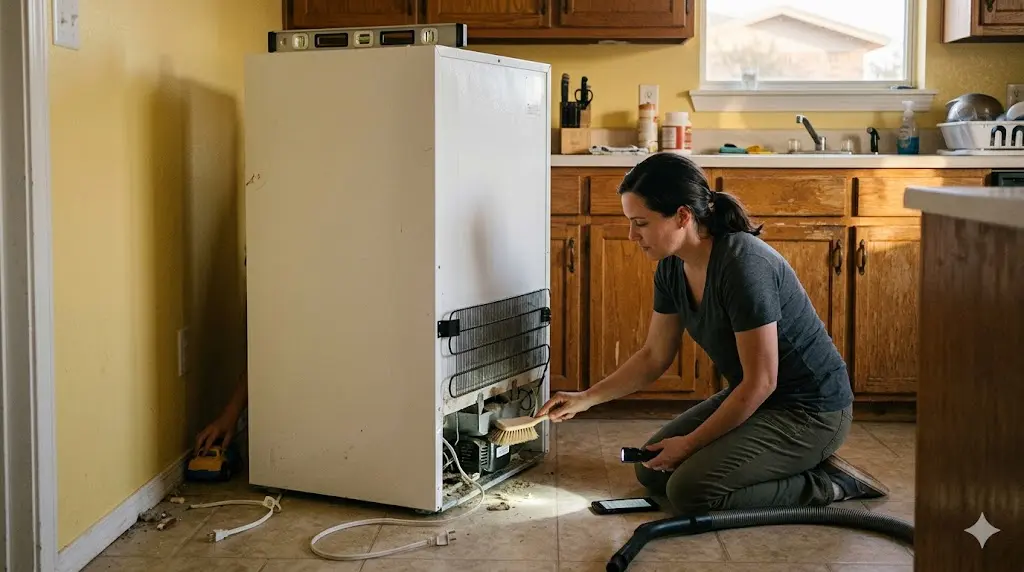
The straightforward fix is cleaning. Unplug the refrigerator, pull it away from the wall, and remove the rear access panel. Use a soft brush or vacuum with a narrow attachment to clean the fan blades and the surrounding area. Check that nothing is obstructing the blade’s rotation. If the blades are cracked or the motor shaft is loose, the fan assembly needs to be replaced.
3. The Compressor Is Overworked or Failing
The compressor is the heart of the refrigeration system. It circulates refrigerant through the condenser and evaporator coils and is responsible for the low, steady hum you expect to hear from a healthy refrigerator. In Abilene’s summer heat, compressors run longer and more frequently than in cooler climates, accelerating wear.
A healthy compressor produces a sound you can barely notice. A struggling compressor produces a loud, persistent hum or buzzing that is noticeably different. A loud click followed by silence, repeating every few minutes, is a sign the compressor is overheating and tripping its own thermal overload protection switch — a clear indicator that professional service is needed before the unit fails entirely.
LG refrigerators with linear compressors and Samsung Twin Cooling models are worth mentioning specifically here. LG linear compressors are known to produce a distinctive loud humming before complete failure, while Samsung’s dual evaporator design can develop loud buzzing from ice buildup in the fresh food compartment fan due to a documented defrost drain issue. If your refrigerator is either of these brands and you are hearing significant noise, brand-specific repair expertise matters.
A starting point you can try at home: turn off the power, clean any accessible dust from the condenser coils at the back of the unit, and allow the compressor to cool completely before restarting. If the noise continues or the refrigerator is no longer maintaining temperature, the compressor or its start relay needs professional diagnosis. Given that compressor replacement can exceed $800 in parts and labor, older units are often better candidates for full replacement than repair.
4. The Ice Maker or Water Inlet Valve Is Acting Up
If the loud noise in your Abilene refrigerator occurs at regular intervals and seems to coincide with the ice maker running its cycle, the ice maker assembly or water inlet valve is likely involved.
A buzzing sound specifically during the ice maker fill cycle often points to the water inlet valve. Low household water pressure can cause this valve to squeal or chatter as it struggles to draw water into the system. Abilene homes supplied by the Abilene Water Utilities system can be subject to pressure variations, particularly during high-demand summer periods, which makes this a locally relevant cause.
Mineral scale from West Texas hard water can coat the inside of the water inlet valve over time, restricting flow and worsening both the noise and the ice production. If cleaning does not resolve the issue, the valve typically needs to be replaced. Ice maker drive motors that are beginning to fail produce grinding or loud clicking sounds during each dispensing cycle as the ejector gears struggle to push ice out through the chute.
If you want to quickly test whether the ice maker is the source, turn the ice maker off at its shutoff arm and wait to see whether the noise stops. If it does, you have confirmed the source.
5. The Start Relay Is Failing
The start relay is a small component attached to the compressor that helps it initiate each cooling cycle. When it begins to fail, the refrigerator produces a distinctive pattern: a click, then a brief buzz, then silence, cycling every few minutes. Some homeowners describe it as the refrigerator trying to start but giving up.
Shaking the start relay gently after removing it from the compressor port reveals a lot. If it rattles like a broken piece of plastic is inside it, the relay is defective. This is one of the most straightforward refrigerator repairs there is. Start relays are inexpensive parts, typically costing between ten and thirty dollars depending on the model, and snapping in a replacement takes only a few minutes. It is worth attempting before concluding the compressor itself has failed.
6. A Loose Drain Pan or Poor Leveling
Sometimes the diagnosis is far simpler than you expect. The drain pan sits underneath the refrigerator and collects condensation that drips from the defrost cycle. If it has shifted out of its mounting position, it vibrates against the floor or the refrigerator frame every time the compressor cycles on.
The fix is simply locating the pan and securing it back into its intended position. This is accessible from the front bottom of most refrigerators after removing the lower grille.
Refrigerators that are not sitting level are also a significant source of rattling and vibrating, a problem that worsens on the slightly uneven floors common in older Abilene homes. Use a level on top of the unit and adjust the front leveling feet until the refrigerator is stable and slightly tilted back, which helps the doors swing shut on their own.
A Sound Reference Guide for Abilene Homeowners
Understanding what type of sound you are hearing speeds up diagnosis considerably.
Grinding or scraping from the freezer area
usually means the evaporator fan is striking ice buildup or its motor bearings have worn out.
Buzzing or loud humming from the back lower area
points to the condenser fan or a strained compressor. In Abilene summers, this sound often appears for the first time in June or July when ambient temperatures push the compressor into overdrive.
Clicking every few minutes without the unit starting properly
is the classic failing start relay pattern.
Rattling from the bottom of the unit
is almost always the drain pan or a leveling issue.
A brief buzzing during ice maker fill cycles
suggests a water inlet valve under pressure stress or affected by mineral buildup.
Squealing or chirping that stops when you open the freezer door
confirms the evaporator fan motor is the source.
DIY Checks You Can Safely Do at Home
Before calling a technician in Abilene, there are a handful of safe checks worth running through. Always unplug the refrigerator before any physical inspection.
Pull the refrigerator about twelve inches away from the wall and check that no objects have rolled behind it and are pressing against the back panel or getting caught in the condenser fan. Visually inspect the condenser fan area for dust buildup and gently clean accessible surfaces with a brush or vacuum. Check that the refrigerator is sitting level using a standard bubble level. Open the freezer and look for visible ice buildup around the back panel where the evaporator fan sits. Confirm the drain pan is sitting properly in its housing under the unit. Turn the ice maker off and listen to see if the noise stops.
None of these steps require disassembling anything, and they eliminate the most common simple causes before spending money on a service call.
call now or book online for same-day repair!
When to Call a Professional Refrigerator Repair Service in Abilene
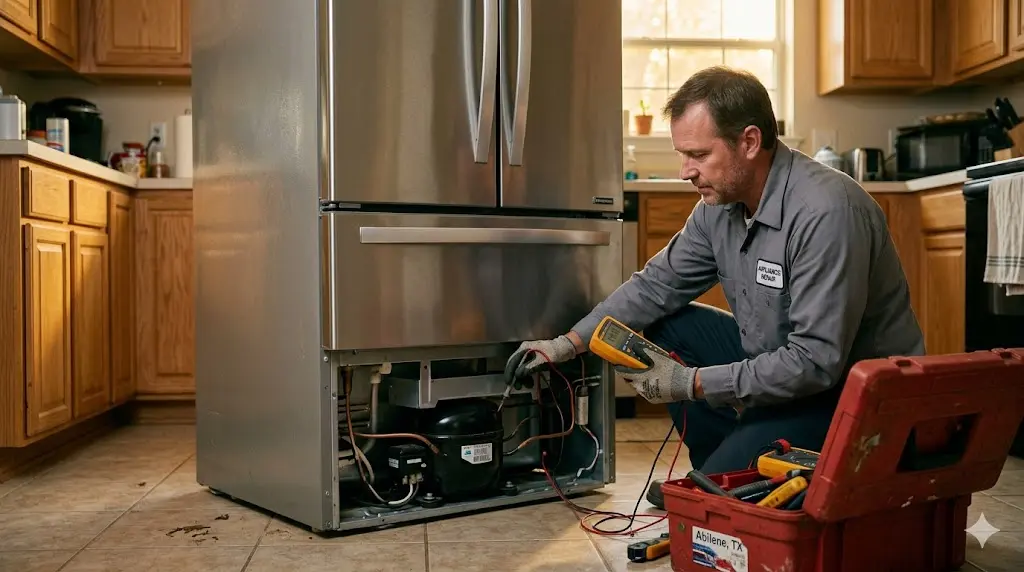
Some noise problems genuinely require professional hands. If the compressor is producing loud ongoing noise and the refrigerator is no longer keeping food cold, that is a sealed system issue requiring a certified technician. If defrosting the freezer resolves the evaporator fan noise but the problem returns within a few days, the defrost heater, defrost thermostat, or control board needs proper diagnosis — parts that interact with the refrigerant system and electrical components.
Abilene has established appliance repair providers including WrisXo Appliance Repair and other local services that specifically work on refrigerators from brands like Whirlpool, GE, Samsung, LG, Maytag, and Kenmore. The local summer heat creates a predictable spike in refrigerator service calls between May and September, so booking early in the season before a problem becomes a breakdown is worth considering.
A typical fan motor replacement in Abilene runs between $150 and $350 including labor. A start relay replacement is significantly cheaper. Sealed system and compressor repairs are the most expensive category, and for older units, replacement is often the more sensible investment.
Preventing Refrigerator Noise Problems in Abilene's Climate
Given the added stress Abilene’s climate places on refrigerators, a small amount of regular maintenance goes a long way.
Clean the condenser coils at the back and bottom of the unit every three months during summer. Dust accumulates quickly in West Texas and restricts heat dissipation, forcing the compressor to work harder and run louder. Keep at least two to three inches of clearance around all sides of the refrigerator to allow proper airflow around the condenser area.
Avoid placing the refrigerator next to the oven, a sunny window, or any other heat source. In a 90°F kitchen without air conditioning, a refrigerator can use up to fifty percent more energy than in a properly cooled space, and that additional load accelerates noise-producing wear on every moving part.
Check door seals every six months by closing the door on a piece of paper and pulling it out. If the paper slides free without resistance, the gasket is no longer sealing properly, which forces the compressor to run more often and more loudly to compensate.
If your refrigerator is more than twelve years old and has begun making significant noise in Abilene’s summer heat, the most cost-effective decision is often an energy-efficient replacement rather than an ongoing series of repairs to a unit whose major components are all approaching end-of-life simultaneously.
Preventing Refrigerator Noise Problems in Abilene's Climate
Why does my refrigerator get louder in summer in Abilene?
Abilene summer temperatures above 100°F force the compressor and fans to run longer and harder to maintain safe food temperatures. This additional workload produces more noise and accelerates wear on all moving components.
Is it normal for a refrigerator to make noise at night when the house is quiet?
Some noise is normal, including gentle humming from the compressor, water sounds from refrigerant moving through the system, and brief clicking during defrost cycles. Noise that has recently appeared, grown louder, or changed character is worth investigating.
Can hard water in Abilene affect refrigerator noise?
Yes. Mineral scale from Abilene’s hard water supply can build up inside the water inlet valve and ice maker assembly, restricting flow and creating buzzing or grinding sounds over time. The valve may need periodic replacement.
How much does refrigerator repair cost in Abilene, TX?
Repair costs in Abilene typically range from around $50 for a simple part like a start relay to $350 or more for fan motor replacements including labor. Compressor and sealed system repairs can exceed $800, making replacement the better choice for older units.
Should I repair or replace a noisy refrigerator in Abilene?
If the unit is under ten years old and the noise traces to a fan motor or start relay, repair is almost always worth it. If the compressor is failing on a unit older than twelve years, replacement is typically more economical, especially given Abilene’s climate demands on the appliance.