
Why Is Your Fridge Freezing Groceries? (6 Causes + Step-by-Step Fixes)
Food freezing in the refrigerator compartment is frustrating and wasteful. Fresh vegetables turn to ice, milk develops ice crystals, and dressing separates. This isn’t normal—your fridge should keep food cold, not frozen.
Below is a complete troubleshooting guide that goes beyond generic advice. You’ll learn exactly what to check, why each issue happens, and how to fix it without calling a repair technician (unless needed).
1. Temperature Setting Is Too Cold (Most Common Cause)
Why This Matters
Refrigerators have a temperature dial or digital control that may have been accidentally turned down. Many users don’t realize their fridge is set to 32°F when it should be 37–40°F.
What to Check
| Setting Type | What to Look For |
|---|---|
| Mechanical Dial | Numbers 1–5 or 1–7; 2–3 is usually ideal |
| Digital Display | Temperature in °F; should read 37–40°F |
| Smart Fridge | App settings may override manual controls |
Step-by-Step Fix
Locate the temperature control (inside fridge or on front panel)
Check current setting against manufacturer’s recommended range
Adjust to 37–40°F (3–4°C)
Wait 24 hours for temperature to stabilize before rechecking
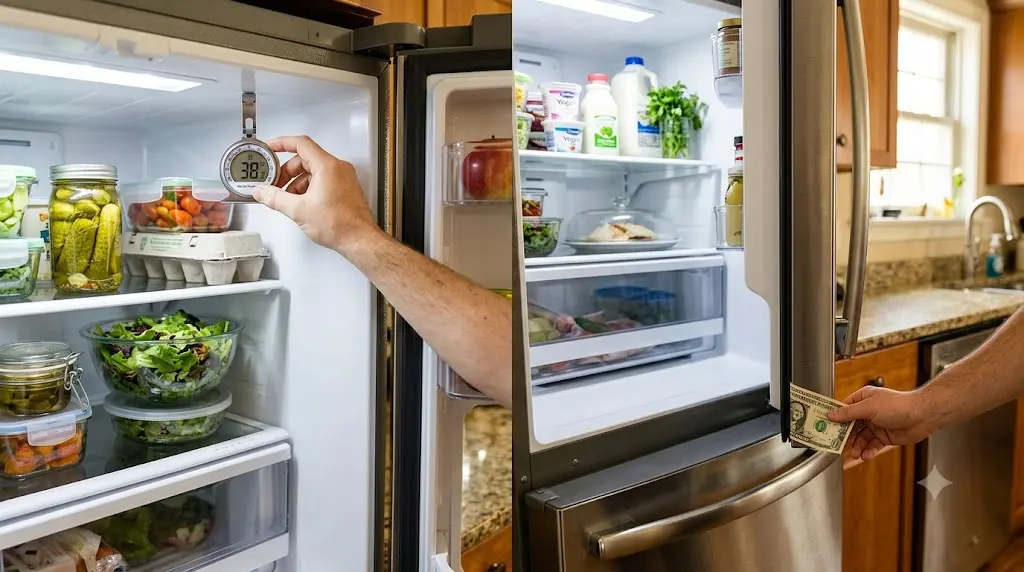
Use an appliance thermometer to verify actual internal temperature
Expert Tip: Don’t trust your fridge’s built-in thermometer. Place a standalone appliance thermometer on a middle shelf and check it after 24 hours. Built-in sensors are often inaccurate.
2. Blocked Air Vents (Causes Uneven Cooling)
Why This Matters
Refrigerators use air vents to circulate cold air between the freezer and fridge compartments. When vents are blocked, cold air pools in one area, causing localized freezing even if the overall temperature is correct.
Common Vent Blockage Scenarios
Tupperware containers pushed against the back wall
Produce bags touching the vent opening
Leftover plates stacked too high
Crisper drawers overfilled and blocking airflow
Step-by-Step Fix
Locate all air vents (usually on the back wall, sometimes top/bottom)
Remove any items touching or covering vents
Rearrange food to maintain 2–3 inches of clearance
Check both fridge AND freezer vents (both affect cooling)
Verify airflow by feeling for cold air movement after 1 hour
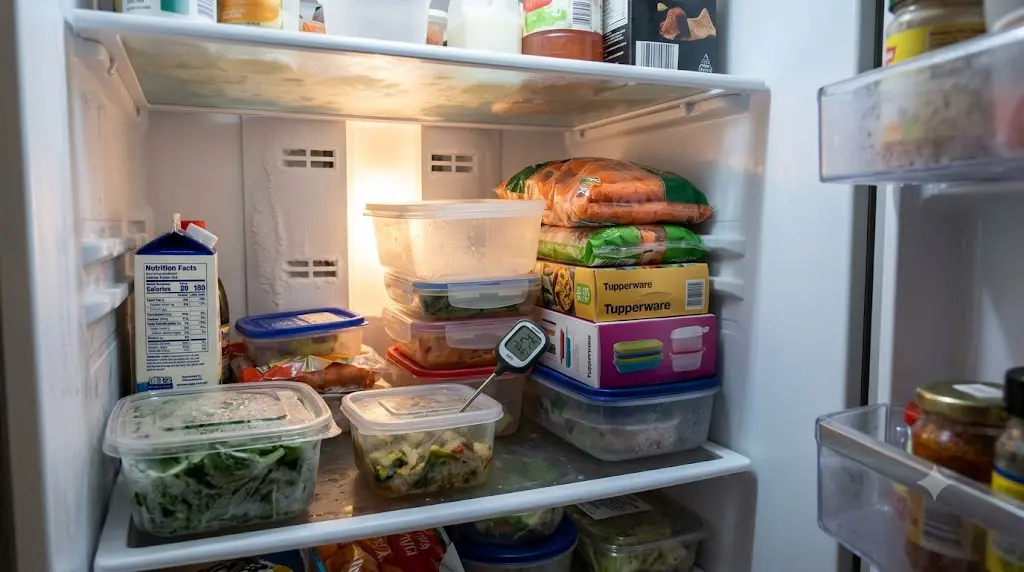
3. Food Stored in Wrong Location (Direct Cold Air Flow)
Why This Matters
Even with correct temperature settings and clear vents, where you place food matters. Items in the direct path of cold air will freeze faster than those in warmer zones.
Temperature Zones in Your Fridge
| 📍 Zone | 🌡️ Temperature | ✅ Best For | ⚠️ Avoid Storing |
|---|---|---|---|
| Top Shelves | Warmest | Leftovers, drinks, snacks | Milk, perishables |
| Middle Shelves | Ideal (37–40°F) | Most foods, dairy, eggs | None |
| Bottom Shelf | Coldest | Raw meat (prevents cross-contamination) | Leafy greens, herbs |
| Back Wall | Coldest Spot | Nothing — freeze zone | Produce, condiments, milk |
| Door Shelves | Warmest (fluctuates) | Condiments, juices, water | Milk, eggs, medication |
| Crisper Drawers | Humidity-Controlled | Vegetables, fruits | Anything that freezes easily |
Real-World Example
A common mistake: Putting a gallon of milk on the bottom shelf against the back wall. The milk freezes overnight because that spot can be 5–10°F colder than the middle shelf.
Fix
Move sensitive items (milk, lettuce, tomatoes, condiments) to middle shelves
Keep produce in crisper drawers with humidity settings adjusted
Never store food directly against the back wall
5. Faulty Thermostat or Thermistor (Overcooling Sensor)
Why This Matters
The thermostat (or thermistor in modern fridges) tells the control board when to stop cooling. If it reads incorrectly, the fridge continues cooling past the target temperature, freezing food.
Symptoms of Bad Thermostat/Thermistor
Temperature setting doesn’t affect actual temperature
Fridge runs continuously without cycling off
Temperature fluctuates wildly (30°F one hour, 45°F the next)
Freezing occurs even after adjusting settings and clearing vents
How to Diagnose
| 🔍 Test | 🛠️ What to Do |
|---|---|
| Temperature Verification | Place an appliance thermometer inside the refrigerator and monitor the temperature for 24 hours. |
| Cycle Observation | Listen for the compressor turning on and off approximately every 15–30 minutes during normal operation. |
| Resistance Check | Use a multimeter to test thermistor resistance values. This procedure requires technical knowledge and electrical safety precautions. |
Fix
Replace the thermistor (common part, $20–40)
Replace the main control board if thermistor replacement doesn’t work (this was the root cause in a documented case)
Call a professional if you’re uncomfortable with electrical diagnostics
6. Ice Maker Issues (Hidden Cause of Overcooling)
Why This Matters
An active ice maker without a water supply (or with a disconnected line) will continuously attempt to make ice, lowering temperatures in the freezer and pulling extra cold air into the fridge compartment.
Symptoms
Ice maker light is on but no ice is being produced
Water line is disconnected or shut off
Food in crisper drawers freezes first
Freezer is excessively cold (-10°F or lower)
Fix
Check if ice maker is turned on (many have an on/off switch or wire arm)
Verify water supply is connected
Turn off ice maker if not in use (refer to user manual for model-specific instructions)
Inspect ice maker for power and error codes
Quick Diagnosis Flowchart
Use this decision tree to identify your problem quickly:
❄️ Is Food Freezing?
🌡️ Check Temperature Setting
Is the refrigerator set below 37°F (3°C)?
💨 Check Air Vents
Are air vents blocked by food containers?
🥛 Check Food Location
Is food stored near the back wall or cooling vent?
🚪 Check Door Seals
Does the paper test fail?
⚙️ Check Thermostat / Thermistor
Does the compressor run constantly?
🧊 Check Ice Maker
Is the ice maker switched on without a water supply?
Common Mistakes That Make Freezing Worse
| ⚠️ Mistake | ❌ Why It's Problematic | ✅ Better Approach |
|---|---|---|
| Setting fridge to “coldest” thinking it's better | Freezes food and wastes energy | Set temperature to 37–40°F (3–4°C) |
| Overstuffing the fridge | Blocks airflow and creates uneven cold pockets | Maintain around 75% capacity for proper airflow |
| Putting hot food directly in fridge | Forces compressor to run longer and increases energy use | Allow food to cool to room temperature first |
| Ignoring freezer temperature | Freezer performance directly affects fridge cooling balance | Keep freezer at 0°F (-18°C) |
| Not cleaning condenser coils | Reduces efficiency and causes erratic cooling cycles | Clean coils every 6 months |
When to Call a Professional (Abilene, TX)
Call an appliance repair technician if:
✅ Temperature still incorrect after all DIY fixes
✅ Compressor runs continuously for 24+ hours
✅ You hear unusual clicking, buzzing, or humming
✅ Fridge is over 10 years old and issues started suddenly
✅ You’re uncomfortable Testing electrical components
For Abilene, TX residents: Look for technicians certified by ASA (Appliance Service Association) or RE Accomplished who specialize in your fridge brand (KitchenAid, Whirlpool, Maytag, GE, etc.).
Prevention Checklist (Keep Food From Freezing Again)
Set temperature to 37–40°F and verify with appliance thermometer
Keep air vents clear of all items
Store sensitive foods on middle shelves, not against back wall
Test door seals monthly using the paper test
Turn off ice maker if not using it
Clean condenser coils every 6 months
Don’t overstuff the fridge (maintain airflow)
Check temperature after power outages or seasonal changes
Frequently Asked Questions
What is the ideal fridge temperature to prevent freezing?
The ideal refrigerator temperature is 37–40°F (3–4°C). Anything below 37°F risks freezing produce, milk, and condiments.
Why is my fridge freezing food but the freezer is fine?
This usually means the thermostat/thermistor is faulty, air vents are blocked, or food is stored too close to the cold air vent. The freezer works independently, so fridge-specific issues cause this.
Can a bad door seal cause freezing?
Yes. Counter-intuitively, a failing door seal lets warm air in, which tricks the control board into overcooling to compensate, freezing food.
How do I know if my fridge thermostat is bad?
Signs include: temperature setting doesn’t change actual temperature, compressor runs constantly, and temperature fluctuates wildly. Test with an appliance thermometer for 24 hours.
Will turning off the ice maker stop freezing?
If the ice maker is active but not connected to water, yes. An active ice maker without water supply can overcool the freezer and fridge.
How long after adjusting temperature should I wait before checking?
Wait 24 hours for the temperature to stabilize after any adjustment.
Is it normal for back-wall items to freeze?
No. The back wall is the coldest spot, but nothing should freeze there at the correct temperature. Move items to the middle shelf.
Key Takeaways
| 📌 Point | ⚙️ Action |
|---|---|
| Temperature | Set to 37–40°F and verify using an appliance thermometer |
| Air Vents | Keep all vents clear — blockage can cause localized freezing |
| Storage | Avoid placing food against the back wall; use middle shelves for sensitive items |
| Door Seals | Test monthly using the paper test; replace gasket if seal is weak |
| Thermostat | Replace thermistor if compressor runs continuously without cycling |
| Ice Maker | Turn off if not connected to a water supply |
Explore our
Professional Refrigerator Repair Services in Abilene Guide!
Conclusion
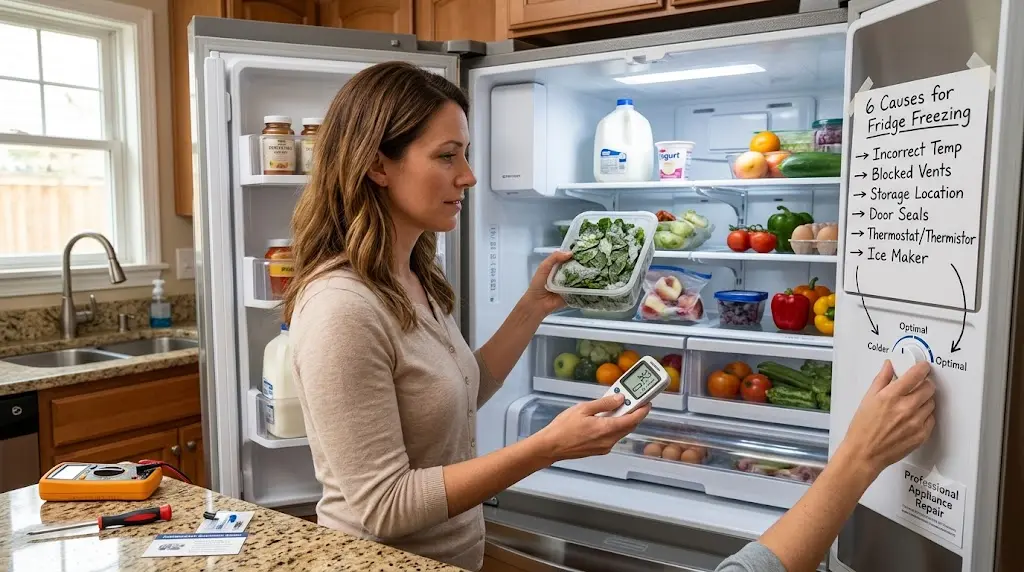
Your fridge freezing groceries is almost always caused by one of six issues: incorrect temperature, blocked vents, poor storage location, failing door seals, faulty thermostat/thermistor, or ice maker problems.
Start with the simplest fixes (temperature adjustment and vent clearing)—they solve most cases. If problems persist after 24 hours of troubleshooting, the issue is likely a failing sensor or control board requiring professional repair.
Call Abilene’s Local Repair Experts in Abilene, TX Now!