
Hard Water & Your Dishwasher: Why Abilene Homes See White Film
If your dishwasher keeps leaving white film on glasses or your dishes look cloudy no matter what detergent you use, you’re not alone in Abilene. Many homes—from Elmwood to the Far Southside—deal with mineral-heavy water that quietly ruins cleaning performance.
Here’s the good news: your dishwasher is probably not broken. Abilene’s hard water is the real issue, and once you address it, your dishes can come out clear again. In most cases, a combination of proper cleaning, minor adjustments, or targeted repair solves the problem fast.
Your Dishwasher Isn’t Broken — Abilene’s Hard Water Is the Real Issue
Hard water in Abilene contains high levels of calcium and magnesium. These minerals don’t rinse away. They stick to your dishes, your dishwasher walls, and critical internal parts.
Over time, this causes:
- White chalky residue on glassware
- Reduced spray pressure
- Poor detergent performance
This is common across zip codes like 79605, 79606, and areas near Loop 322 where mineral levels are consistently high.
Why Homeowners Trust Journeys Appliance Repair in Abilene
We work on dishwashers across neighborhoods like River Oaks–Brookhollow, Red Bud Area, and near Buffalo Gap Road every week. Hard water damage is one of the most common issues we fix.
What Makes Our Approach Different
We test your water hardness before recommending repairs
We focus on fixing the root cause, not just symptoms
We help you prevent future buildup, not just clean it once
How Hard Water Affects Dishwashers
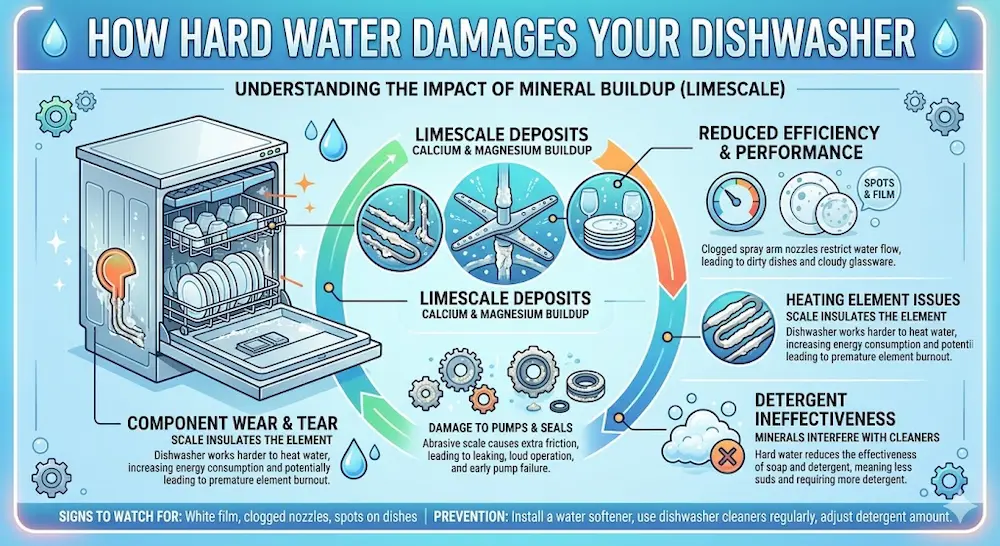
Hard water doesn’t just leave spots—it slowly reduces your dishwasher’s ability to function.
What Happens Inside Your Dishwasher
- Minerals coat the heating element, reducing efficiency
- Spray arms clog with limescale, lowering water pressure
- Detergent reacts poorly, leaving residue behind
In hotter areas of Abilene, like near South 14th Street, heat accelerates this buildup even faster.
Signs Your Dishwasher Has Hard Water Damage
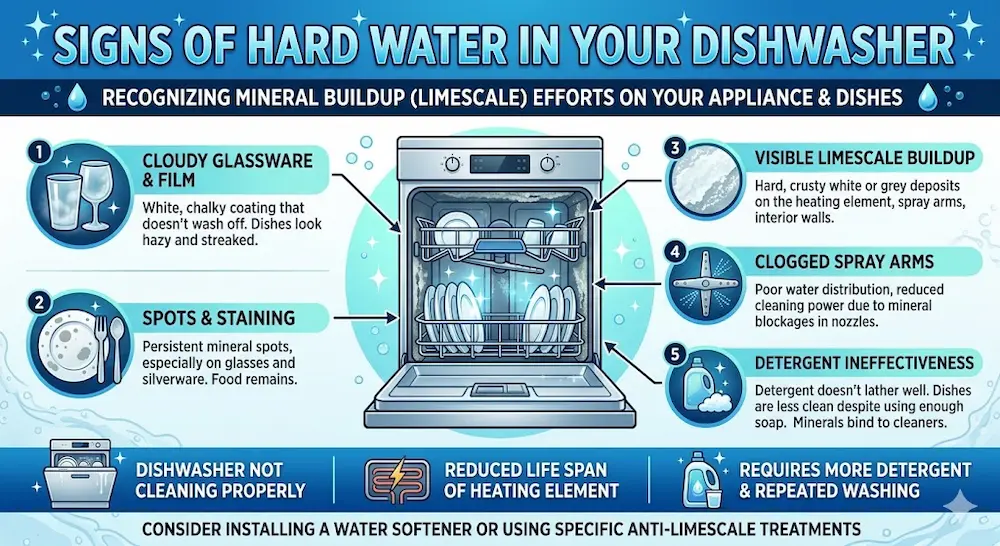
If you notice any of these, hard water is likely the cause:
- Cloudy dishes after washing
- White film on glassware
- Chalky buildup inside the dishwasher
- Weak spray pressure
- Dishes not fully clean after a cycle
These problems don’t fix themselves. They usually get worse over time.
Why Does Hard Water Leave White Film on Dishes?
Hard water leaves white film because minerals like calcium stay behind after water evaporates. These minerals stick to dishes and surfaces, creating a chalky residue that normal detergent cannot fully remove.
This residue forms during the rinse cycle. As water dries, minerals remain on your glassware. That’s why even clean dishes look dirty.
Can Hard Water Permanently Damage a Dishwasher?
Yes, hard water can cause permanent damage if left untreated. Mineral buildup clogs spray arms, coats heating elements, and reduces water flow, eventually leading to poor performance or component failure.
Over time, this can lead to:
- Burned-out heating elements
- Blocked valves
- Reduced lifespan of the appliance
Early cleaning and maintenance prevent costly repairs.
How Do You Remove Limescale from a Dishwasher?
You can remove limescale using a descaling agent or vinegar cycle. Run an empty dishwasher with a cleaning solution to break down mineral deposits and restore performance.
For deeper buildup:
- Clean spray arms manually
- Remove and rinse filters
- Use professional descaling if buildup is severe
DIY works for light buildup. Heavy scaling needs professional service.
Case Study — Fixing Cloudy Dishes in a South Abilene Home
A homeowner near Buffalo Gap Road (79605) called us after months of cloudy dishes. They had tried multiple detergents with no success.
Problem → Diagnosis → Solution → Result
Problem
Glasses always cloudy, dishwasher running longer
Diagnosis
Severe limescale buildup in spray arms and heating element
Solution
Full descaling, spray arm cleaning, and system flush
Result
Clear dishes after first cycle, normal performance restored
Our Dishwasher Repair & Cleaning Process
We follow a clear, proven process to fix hard water problems:
Test water hardness levels
Inspect internal dishwasher components
Remove limescale buildup
Clean spray arms and filters
Test full wash cycle for performance
Dishwasher Repair is Done!
Tools & Expertise We Use for Hard Water Problems
Journeys Appliance repair use professional-grade tools that go beyond basic cleaning:
- Water hardness testing kits
- Commercial descaling solutions
- Precision cleaning tools for spray arms
- Diagnostic equipment for performance testing
This allows us to fix issues that DIY methods often miss.
DIY vs Professional Repair for Hard Water Issues
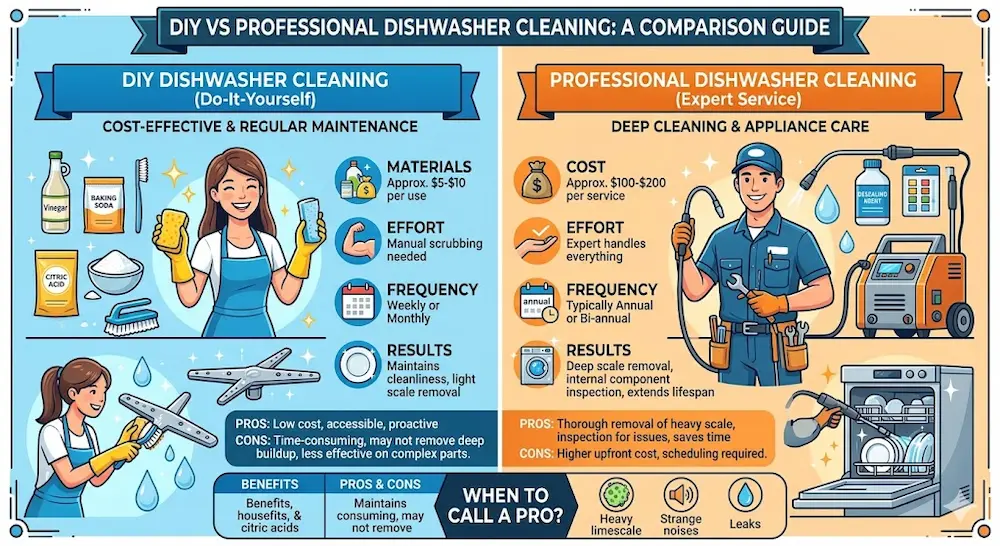
Factor | DIY Cleaning | Professional Service |
Cost | Low upfront | Moderate upfront |
Effectiveness | Short-term | Long-term |
Risk | Miss hidden buildup | Full system cleaned |
Time | Trial and error | Fast resolution |
Results | Inconsistent | Reliable |
Pricing for Dishwasher Cleaning & Repair in Abilene
Here’s what most homeowners can expect:
- Basic cleaning: $80–$150
- Deep descaling service: $150–$250
- Component repair (if needed): $200–$400
We always diagnose first. Many jobs cost less than expected because the issue is water-related—not mechanical.
Does a Water Softener Help Dishwashers Work Better?
Yes, a water softener removes minerals from water before it enters your dishwasher. This prevents buildup, improves cleaning performance, and extends appliance life.
Homes near areas like Fort Phantom or North College often benefit the most due to higher mineral levels.
A softener is a long-term solution, not just a quick fix
Why Are My Glasses Cloudy After the Dishwasher?
Glasses become cloudy because hard water minerals stick to the surface during drying. Over time, this buildup creates a dull, hazy appearance that regular washing cannot remove.
In some cases, etching can occur, which is permanent damage caused by repeated mineral exposure.
How Often Should You Clean a Dishwasher with Hard Water?
You should clean your dishwasher once a month if you live in a hard water area like Abilene. Regular cleaning prevents buildup and keeps performance consistent.
For heavy use households:
- Clean every 2–3 weeks
- Inspect spray arms monthly
Consistency prevents major issues later.
Areas We Serve in Abilene
We provide dishwasher repair and cleaning across:
If you’re anywhere in Abilene, we understand your water conditions.
Conclusion — Fix Hard Water Dishwasher Problems in Abilene Today

Hard Water & Your Dishwasher issues are common in Abilene, but they are fixable. Most problems—white film, cloudy dishes, poor cleaning—come from mineral buildup, not machine failure.
With the right cleaning, maintenance, or repair, your dishwasher can work like new again. The key is addressing the hard water before it causes long-term damage.
📞 (325)238-9044
Check Your Full Home for Hard Water Damage
- Refrigerator repair in Abilene — Fix cooling issues, ice maker problems, and mineral-related performance loss before it leads to costly repairs.
- Washer repair in Abilene — Prevent buildup, drainage issues, and detergent problems caused by hard water.
- Appliance maintenance services in Abilene — Protect all your appliances with routine maintenance designed for West Texas water conditions.
Taking care of your appliances early helps you avoid expensive breakdowns and keeps everything running efficiently year-round.