
Washer Not Spinning Clothes Dry in Abilene? Read This First
If you opened your washing machine after a full cycle and pulled out a sopping wet heap of laundry, you are not alone. This is one of the most common appliance complaints we hear from Abilene homeowners, renters near Dyess AFB, and families across Taylor County.
The short answer to why your washer is not spinning clothes dry comes down to one of several causes: a clogged drain pump, a worn or broken drive belt, an unbalanced load, a faulty lid or door latch, a malfunctioning motor coupler, or in Abilene’s specific case, mineral buildup caused by the city’s notoriously hard water.
Most of these problems are fixable, and knowing which one you are dealing with makes all the difference between a quick DIY solution and a call to a certified appliance technician.
Keep reading for a full breakdown of every possible cause, what you can check yourself, what requires professional hands, and how Abilene’s West Texas water supply plays a bigger role in this problem than most people realize.
Why This Problem Is Especially Common in Abilene, Texas
Before diving into the mechanical causes, it helps to understand the local context. Abilene’s municipal water supply carries extremely high mineral content, primarily calcium and magnesium ions that naturally occur in the West Texas limestone terrain. This is commonly referred to as hard water, and it sits well above the threshold that engineers consider damaging to home appliances.
Over months and years of normal laundry cycles, those calcium and magnesium deposits accumulate inside your washing machine’s drum, internal hoses, drain pump, and detergent dispenser. This limescale buildup gradually restricts water flow, confuses the machine’s sensors, and reduces the spin cycle’s effectiveness. What this means practically is that a washer in an Abilene home may develop spin cycle problems faster than the same machine in a city with softer water, even if it is properly maintained. Families near Elmwood, South Abilene, and the neighborhoods surrounding Hardin-Simmons University all deal with this reality on a daily basis.
Understanding this local factor does not mean your machine is beyond saving. It means you need to approach diagnosis and maintenance with Abilene’s water conditions in mind.

The Most Common Reasons a Washer Stops Spinning Clothes Dry
1. A Clogged or Failing Drain Pump
The single most frequent cause of clothes coming out soaking wet after a wash cycle is a drain pump that cannot fully clear the water from the drum before the spin begins. When standing water remains in the tub, the machine’s internal sensors detect the excess weight and moisture, and the spin cycle either slows dramatically or stops altogether as a protective measure.
In Abilene specifically, the drain pump is particularly vulnerable because mineral deposits from hard water gradually coat its internal components, reducing the pump’s flow capacity even without a physical blockage from lint, coins, or debris. You might notice this problem worsening gradually over several months rather than appearing suddenly overnight.
To check the drain pump filter yourself, consult your machine’s owner manual for the filter access location (usually behind a small panel near the front bottom of front-load machines or underneath top-loaders). Clear any lint, coins, hair, or debris you find there. If the filter looks clean but the problem continues, the pump motor itself may have failed and will need replacement by a technician.
2. An Unbalanced Load or Overloaded Drum
This is the easiest cause to fix, and it accounts for a surprisingly large number of service calls. Modern washing machines contain sensors that detect when the weight distribution inside the drum is uneven. When the machine identifies an imbalance during the spin cycle, it automatically slows or halts spinning to prevent the drum from bouncing violently, which could damage the bearings, suspension rods, or even the floor beneath the machine.
Heavy items like towels, denim, and bedding are frequent culprits. They clump together on one side of the drum when wet, creating an imbalanced condition. Similarly, stuffing the drum beyond its recommended capacity prevents clothes from moving freely, which not only causes poor spinning but also leads to inadequate rinsing.
The fix is simple: pause the cycle, open the lid or door, and manually redistribute the clothing evenly around the drum. If the machine is overloaded, remove a few items and run a separate smaller load. Going forward, mixing heavy items with lighter ones in the same load helps maintain balance throughout the cycle.
3. A Worn, Stretched, or Broken Drive Belt
The drive belt is the rubber loop that connects your washing machine’s motor to the drum, allowing it to spin at high speeds. Over time, this belt stretches, slips, or breaks entirely. When the belt loses tension or snaps, the motor runs but the drum either spins too slowly to remove water from fabric or does not spin at all.
A telltale sign of a belt issue is a machine that hums normally during the spin cycle but the drum feels loose or barely moves when you manually turn it with the machine unplugged. You may also hear a squealing or burning smell if the belt is slipping on the pulleys. Drive belt replacement is a moderately advanced repair; it is achievable for someone comfortable with basic appliance disassembly, but calling a technician avoids the risk of damaging the motor or pulleys in the process.
4. A Faulty Lid Switch (Top-Load Washers) or Door Latch (Front-Load Washers)
Every washing machine has a built-in safety mechanism that prevents the drum from spinning while the lid or door is open. In top-load machines, this is a small plastic lid switch located under the lid. In front-load machines, it is an electronic door latch assembly. When either component malfunctions or becomes worn, the machine’s control board receives a false signal indicating the door is open, and it refuses to engage the spin cycle entirely.
You can test the lid switch on a top-loader by listening for a distinct clicking sound when you press down on the lid firmly. If there is no click, the switch may have failed. On front-load machines, inspect the door latch for visible cracks or misalignment. Both parts are relatively inexpensive and straightforward replacements, though a certified technician can handle the job in under an hour.
5. A Broken Motor Coupler
The motor coupler sits between the washing machine motor and the transmission, and its job is to transfer power from one to the other. It is intentionally designed to break before the motor or transmission sustains damage from sudden strain, essentially serving as a sacrificial safety component.
When the motor coupler fails, the machine fills and drains normally but the drum will not agitate or spin at all. This is one of the more definitive failures because the symptoms are consistent and hard to attribute to anything else. Replacement requires partially disassembling the machine, making it a job best left to an experienced repair technician.
6. Excess Detergent and Soap Suds
This one surprises a lot of people, but using too much laundry detergent or using standard detergent in a high-efficiency (HE) washing machine causes an excess of suds to build up inside the drum. That foam prevents the drum from reaching the high spin speeds needed to force water out of fabric.
In Abilene, where hard water reduces the effectiveness of soap and detergent, many residents compensate by adding extra detergent to get clothes clean. This is an understandable response but can backfire badly. HE machines in particular require specially formulated low-sudsing detergent, and even a modest excess of regular detergent creates significant foam that lingers through the rinse and spin cycles.
If you suspect over-sudsing, run a rinse-only cycle and observe whether foam is visible in the drum or through the door window. Going forward, use the detergent manufacturer’s recommended measurement and ensure you are using HE-rated detergent if your machine calls for it.
7. A Worn Clutch Assembly (Top-Load Washers)
In top-loading washing machines, the clutch assembly helps the drum gradually reach full spin speed. When the clutch wears down, it either slips during the spin cycle or fails to engage properly, leaving the drum spinning at far below the RPM needed to extract water from fabric. This typically presents as a gradually worsening problem rather than a sudden failure, and you may notice clothes getting progressively wetter over a period of weeks before the situation becomes critical.
8. Control Board or Motor Issues
In more serious cases, the electronic control board that governs the spin cycle may develop faults, or the drive motor itself may overheat and trigger an automatic shutoff sensor. These are less common failures but do occur, particularly in older machines or in units that have been running in demanding conditions. Control board repairs and motor replacements are firmly in the territory of professional appliance technicians.
9. Incorrect Cycle Selection
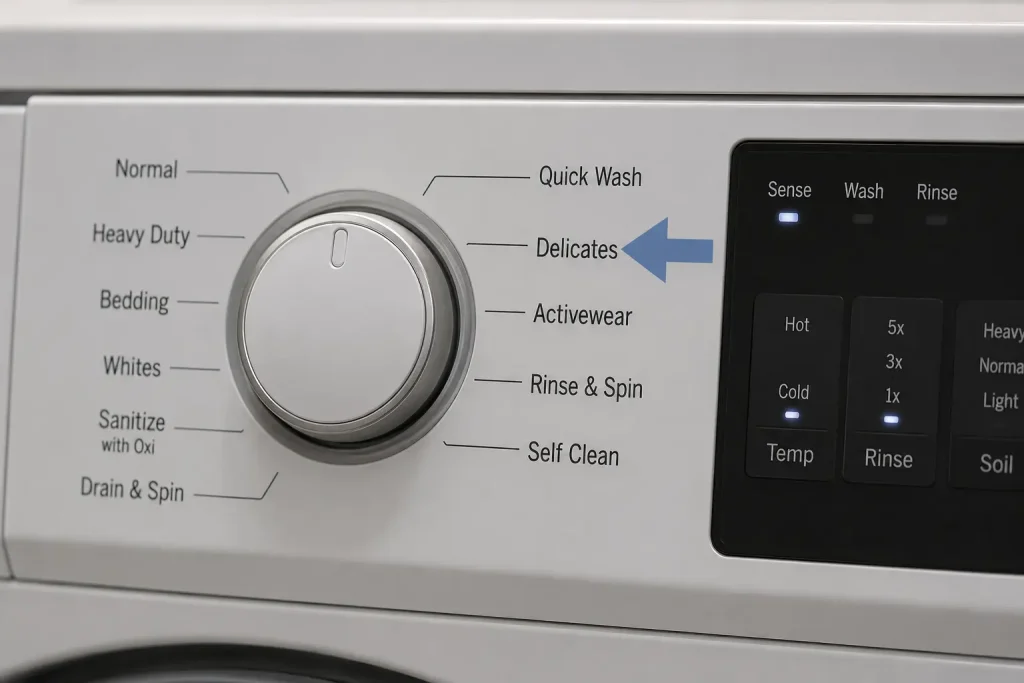
Sometimes the simplest explanation is the correct one. Delicate, hand wash, and gentle cycles are intentionally programmed to use very low spin speeds to protect fine fabrics and delicate garments. If you accidentally selected one of these cycles for a load of heavy cotton shirts or denim jeans, the machine will complete the cycle as designed, and your clothes will come out significantly wetter than expected.
Check the cycle selector before assuming a mechanical failure. Running a dedicated drain-and-spin cycle after the fact is a quick way to remove the remaining water without rewashing everything.

DIY Checks You Can Do Right Now Before Calling a Technician
Not every spin problem requires a service call. Before picking up the phone, work through this quick checklist:
Check the load balance by opening the door and redistributing any clumped items evenly around the drum. Verify the cycle selection and make sure you have not accidentally chosen a low-spin or delicate setting. Inspect the drain hose at the back of the machine to confirm it is not kinked, crushed, or bent at a sharp angle. Clean the drain pump filter using the instructions in your owner’s manual. Confirm the machine is sitting level on the floor by using a bubble level on top of the machine; if it rocks on diagonal corners, adjust the leveling feet. Run a dedicated drain and spin cycle to see whether the machine can execute that function correctly in isolation.
If the machine completes a drain-and-spin cycle successfully but still leaves clothes wet at the end of a full wash cycle, the problem may be related to the machine’s sensors or control logic rather than a purely mechanical component.
How Hard Water Mineral Buildup Specifically Worsens Spin Performance
Abilene’s hard water does something particularly damaging to washing machine performance that many homeowners do not connect to their laundry problems. As mineral deposits from calcium and magnesium accumulate on the internal components of the machine, they interfere with the sensors that measure water level and drum speed. When these sensors give inaccurate readings, the machine’s control board makes incorrect decisions about when to advance from one cycle stage to the next, including the transition into high-speed spinning.
Additionally, limescale inside the drain pump housing reduces the pump’s ability to clear water quickly enough, and the residual moisture left in the drum throws off the balance calculation during the spin phase. The result is a machine that technically works but consistently underperforms during the spin cycle, leaving you with clothes that feel heavy and damp even after a full wash.
Running a monthly cleaning cycle with a washing machine cleaner specifically designed to dissolve mineral deposits helps significantly. White vinegar run through an empty hot-water cycle achieves a similar effect at lower cost. For Abilene households that have not addressed the hard water issue at the source, these cleaning cycles should be treated as essential maintenance rather than optional upkeep.
When to Call a Professional Appliance Repair Technician in Abilene
Some problems are safely manageable with a bit of DIY effort. Others are not, and attempting to fix them without proper training risks making the damage worse or creating a safety hazard. Call a certified appliance technician in Abilene when you notice any of the following situations:
The drum does not spin at all, even on a dedicated spin-only cycle. You hear grinding, clunking, or loud banging during the spin phase. The machine vibrates violently even with a properly balanced and smaller-than-usual load. The motor runs but the drum does not move. Your machine displays error codes related to the motor, door lock, or spin sensor. You have already replaced a drive belt or cleaned the pump filter and the problem persists.
Local Abilene technicians familiar with the city’s hard water conditions can diagnose these issues quickly and carry the OEM parts for major brands including Whirlpool, Maytag, Samsung, LG, GE, Kenmore, and Electrolux. Many offer same-day service appointments, which is particularly valuable for military families stationed at Dyess AFB who depend on reliable access to laundry facilities at home.
Explore our “Why Is My Washer Not Draining in Abilene Post!”
Repair vs. Replace: How to Make the Right Decision
One of the most stressful moments in this situation comes when a technician presents you with a repair estimate and you have to decide whether the fix is worth it relative to the cost of a new machine. A reliable rule of thumb used across the appliance industry is to proceed with repair if the estimated cost is less than 50 percent of the price of an equivalent replacement washer. If the repair cost climbs above that threshold, particularly on a machine that is more than eight to ten years old, investing in a new unit often makes more financial sense over a five-year horizon.
Spin cycle repairs in Abilene typically range from around $100 for a simple filter cleaning and diagnosis visit to $400 or more for motor, control board, or transmission work. Drive belt replacement generally falls in the $150 to $250 range depending on the machine brand and labor time required. Keep Abilene’s hard water factor in mind as well; a new machine will face the same mineral buildup pressures as your current one unless you also address the underlying water quality issue through a whole-home water softener installation.
Preventing Spin Cycle Problems Before They Start
Preventive maintenance is far less expensive than emergency repairs, and a few consistent habits dramatically extend the working life of any washing machine in West Texas conditions.
Clean the drain pump filter every one to three months to remove lint, coins, hair, and debris before they cause a blockage. Run an empty hot-water cleaning cycle monthly with an appliance-rated descaler or white vinegar to dissolve limescale from internal components. Always use HE-rated detergent in high-efficiency machines and follow the manufacturer’s recommended dosage rather than estimating. Avoid washing a single heavy item alone; pair bulky pieces with smaller items to help the machine maintain balance during the spin phase. Inspect the drain hose quarterly to confirm it is free of kinks, properly positioned, and not running water back into the drum. Level the machine whenever it is moved or whenever you notice increased vibration during spin cycles. Consider a whole-home water softener installation to address the mineral content in Abilene’s water supply at the source, protecting your washing machine, water heater, dishwasher, and all water-using appliances simultaneously.
Frequently Asked Questions About Washer Spin Problems in Abilene
Why does my washer spin but my clothes are still soaking wet?
When the machine completes a spin cycle but clothes remain heavily saturated, the most likely cause is a partially blocked drain hose or pump that allows some water through but cannot clear the drum fully before spinning. The water that drains back into the drum re-soaks the clothing during the spin phase. A kinked drain hose, a stretched drive belt that prevents the drum from reaching full RPM, or excessive detergent foam can also produce this result.
Is Abilene's hard water actually causing my washer to malfunction?
Yes, it can and often does contribute to spin cycle problems over time. Abilene’s water supply carries high levels of dissolved minerals that accumulate inside washing machine components. This mineral buildup restricts water flow through internal hoses and the drain pump, interferes with level and water sensors, and causes the machine’s control board to make inaccurate decisions during the spin phase.
How long does a typical washer repair take in Abilene?
Most straightforward repairs such as drive belt replacement, lid switch replacement, or drain pump clearing take one to two hours once a technician arrives on site. Parts that are in stock locally are typically installed during the same visit. More complex repairs involving control boards, motors, or parts that must be ordered may require a follow-up appointment.
Should I repair my washer or buy a new one?
If your repair estimate is below half the cost of a comparable new machine and your washer is under ten years old, repair is usually the smarter financial choice. If repair costs are high, the machine is over a decade old, and it has required multiple repairs in recent years, a new unit is likely the better long-term investment. A local Abilene technician can give you an honest assessment of the machine’s overall condition.