Refrigerator Door Not Sealing Properly? Here's What to Do in Abilene, TX
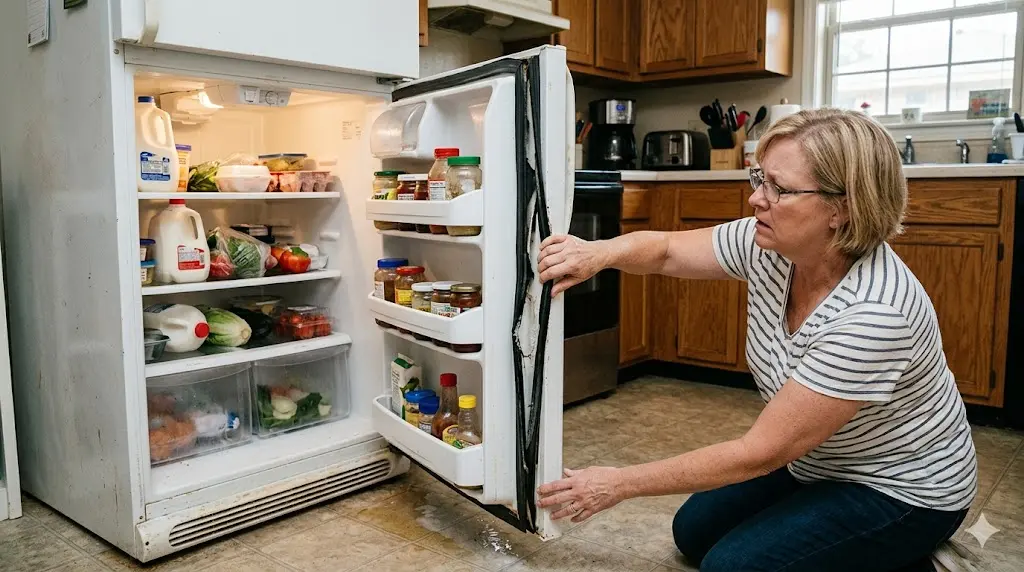
A refrigerator door that won’t seal properly is almost always caused by a worn, dirty, or warped door gasket (the rubber strip around the door edge). In most cases, cleaning or replacing the gasket solves the problem within an hour. If the door itself is misaligned or a hinge is bent, a professional adjustment may be needed.
In Abilene’s extreme heat, a failing seal can spike your energy bill by 15 to 25% and compromise food safety within hours.
Why a Faulty Fridge Seal Is a Bigger Problem Than It Looks
Most Abilene homeowners notice the signs — the fridge feels warm inside, the motor runs constantly, or there’s moisture pooling near the bottom. What they don’t always realize is how fast these symptoms compound.
In West Texas, summer temperatures regularly push into the triple digits. When your refrigerator door seal fails in July in Abilene, the appliance is fighting an ambient temperature that may already be 90°F in your kitchen. The compressor works overtime, energy costs climb, and food in the door shelf — deli meats, dairy, leftovers — can cross the 40°F food safety threshold faster than you’d expect.
The good news: this is one of the most fixable appliance problems you’ll encounter, and in many cases you won’t need a repair technician at all.
Visit Our Why your fridge is freezing groceries Guide!
How to Tell If Your Refrigerator Door Seal Is the Problem
Before spending money, confirm the seal is actually the culprit.
The Dollar Bill Test
This is the quickest diagnostic tool available:
- Close the refrigerator door on a folded dollar bill so half sticks out.
- Try to pull the bill out with moderate resistance.
- If it slides out easily with little to no drag, the seal in that spot is failing.
- Repeat around the full perimeter of the door — top, sides, and bottom corners.
A healthy gasket will grip the bill firmly. If you find two or more spots where it slides freely, the gasket needs attention.
Visual Inspection Signs
Look for these warning signs along the door gasket:
- Visible cracks, tears, or hardening in the rubber
- Areas where the gasket has pulled away from the door groove
- Mold or mildew buildup in the folds (common in Abilene’s summer humidity)
- A flattened or compressed appearance instead of a full, round profile
Performance Warning Signs
- Refrigerator running almost constantly
- Interior temperature above 40°F
- Frost buildup inside a frost-free unit
- Condensation or water pooling on the floor near the fridge
- Noticeably higher electricity bills
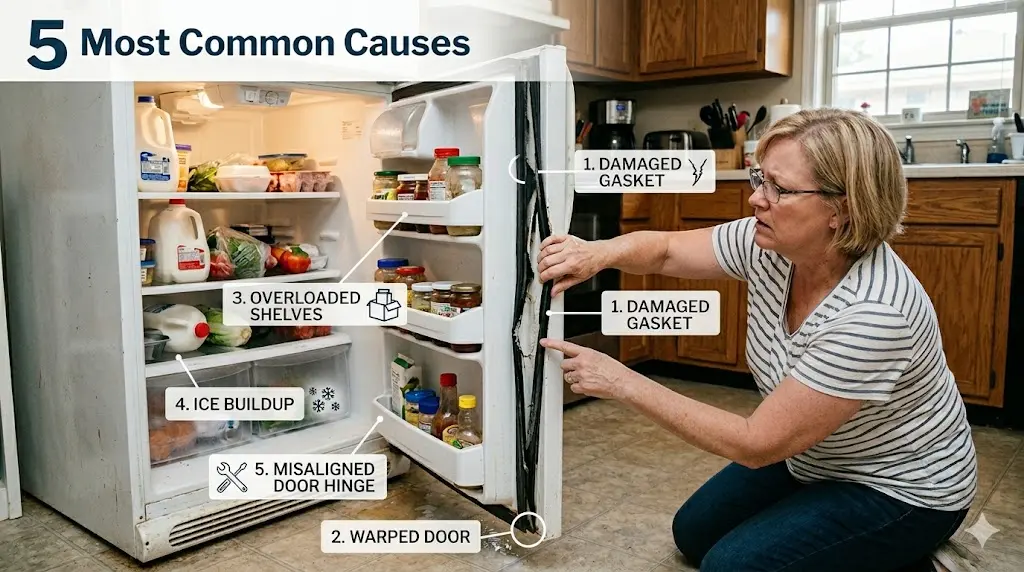
The 5 Most Common Causes of a Refrigerator Door Not Sealing
1. Dirty or Sticky Gasket
Food residue, grease, and grime build up in the gasket folds over time. Even a small amount of debris can break the airtight contact between the gasket and the refrigerator frame.
Fix: Clean the entire gasket with warm soapy water and a soft toothbrush. Get into every fold. Dry it completely. If the gasket is otherwise in good condition, this cleaning often restores a tight seal immediately.
2. Hardened or Cracked Rubber
Gaskets are made of flexible rubber or vinyl. With age and — especially in Abilene — repeated exposure to heat, they lose flexibility and crack. A hard gasket cannot compress properly against the frame.
Fix: If cleaning doesn’t help and the rubber feels stiff, replacement is the right call. Gaskets cost between $20 and $80 depending on brand and model, and most homeowners can install one themselves in 30 to 45 minutes.
3. Warped or Deformed Gasket
Sometimes the gasket isn’t cracked but has lost its original shape. This often happens when someone leaned heavily on an open door or stored items against the door too aggressively.
Fix (temporary): Some homeowners restore a warped gasket with a heat gun or hair dryer on low heat — gently warming the gasket allows it to reshape as it cools. Press it firmly against the door frame while warm and hold it until it cools. This works on minor warps. For major deformation, replacement is more reliable.
4. Misaligned Refrigerator Door
The door itself may be fine, but if the refrigerator is not level or the hinges have shifted, the door won’t close flush against the frame. This is more common in older homes where floors settle, or after a fridge has been moved.
How to check: Place a spirit level on top of the refrigerator. Most models should be very slightly tilted back (about 1/4 inch) so the door naturally swings shut. If it’s tilted forward or sitting unlevel side to side, the door won’t seal properly.
Fix: Adjust the leveling feet at the bottom front of the refrigerator. Turn them clockwise to raise that corner. For hinge adjustments, consult your owner’s manual — this varies significantly by brand and usually requires loosening a few screws.
5. Worn or Broken Door Hinge
Heavy use, overfilled door shelves, or children hanging on the door can bend or loosen hinges over time. A sagging door simply cannot create a full perimeter seal.
Fix: Tightening loose hinge screws sometimes solves the problem. Bent or broken hinges usually require professional replacement, especially on French door or bottom-freezer models where hinge assemblies are more complex.
DIY vs. Professional Repair: A Decision Framework
| Situation | DIY Appropriate? | Recommendation |
|---|---|---|
| Dirty gasket | Yes | Clean thoroughly and test again. |
| Mildly warped gasket | Yes (with caution) | Use a hair dryer to reshape, then replace if ineffective. |
| Cracked or hardened gasket | Yes | Order a model specific gasket and replace it yourself. |
| Refrigerator out of level | Yes | Adjust the leveling feet. |
| Loose hinge screws | Yes | Tighten with a screwdriver. |
| Bent or broken hinge | No | Call a professional. |
| Door out of square on French door model | Probably not | Call a professional. |
| Refrigerator older than 12 years | Consider replacement | Factor repair cost against remaining appliance lifespan. |
How to Replace a Refrigerator Door Gasket Yourself
Tools needed: Flathead screwdriver, putty knife, warm water, mild soap, your replacement gasket
Time required: 30 to 60 minutes
Step 1 — Order the correct gasket.
Find your refrigerator model number (usually on a label inside the fridge, near the top or on the side wall). Order from the manufacturer or a parts retailer using that exact number.
Step 2 — Soften the new gasket.
Soak the new gasket in warm water for 10 to 15 minutes before installation. This makes it flexible and easier to seat properly.
Step 3 — Remove the old gasket.
Starting at a corner, pull the old gasket away from the door liner. On most models it's held by a retainer strip that loosens when you pull. Some models require removing screws — check your manual.
Step 4 — Clean the channel.
Wipe the groove where the gasket seats. Remove all old residue, mold, or adhesive.
Step 5 — Install the new gasket.
Starting at the top corners, press the new gasket firmly into the channel or under the retainer. Work your way around the full perimeter. Make sure every section is fully seated.
Step 6 — Test the seal.
Close the door and perform the dollar bill test in multiple spots. If any area fails, press that section of gasket more firmly into place.
Step 7 — Allow 24 hours for the gasket to fully conform.
Don't overfill the door shelves right away.
The Real Cost of Ignoring a Bad Seal in Abilene
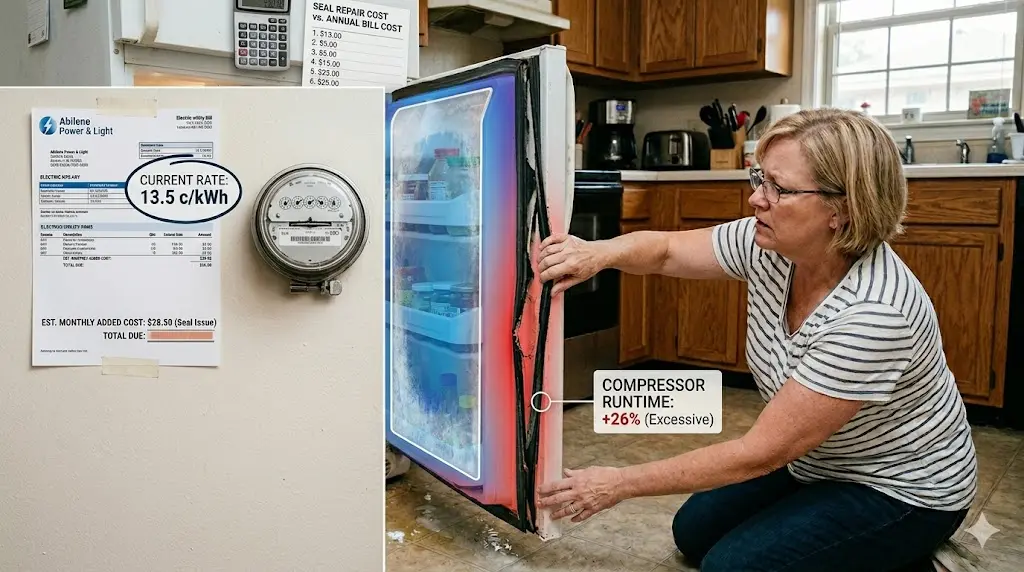
Texas electricity rates average around 12 to 14 cents per kilowatt-hour. A refrigerator with a failing seal that runs its compressor 20 to 30% more than normal can add $15 to $35 per month to your utility bill — sometimes more in summer months when the kitchen is already warm.
Beyond the energy cost, there’s the food safety risk. The FDA recommends keeping refrigerators at or below 40°F. A compromised seal on a hot Abilene day can push interior temperatures above that threshold within a few hours, particularly in the door shelf areas where dairy and condiments are stored.
There’s also the compressor wear to consider. A compressor that runs constantly to compensate for a bad seal has a shorter service life. What starts as a $40 gasket problem can eventually contribute to a compressor failure that costs $400 to $600 to repair — or more than the refrigerator is worth to replace.
Maintenance Tips to Prevent Seal Problem
These habits can extend your gasket life by years, especially in Abilene’s demanding climate:
- Clean the gasket monthly. A quick wipe with soapy water prevents the buildup that leads to mold and sticking.
- Apply a thin coat of petroleum jelly twice a year. This keeps the rubber supple and prevents cracking — especially important in hot, dry West Texas summers. Use just enough to give it a slight sheen.
- Avoid overloading door shelves. Heavy gallon jugs and packed condiment shelves put extra stress on hinges and pull the door slightly out of alignment over time.
- Don’t let kids hang on the door. This is one of the fastest ways to bend hinges and throw the door out of square.
- Check the level once a year. Floors settle, and refrigerators get bumped. A quick level check takes 30 seconds.
- Keep the fridge 2 to 3 inches from the wall. Adequate air circulation around the back reduces overall operating temperature and reduces wear on all components including seals.
Common Refrigerator Brands and Gasket Notes for Abilene Homeowners
| Brand | Gasket Replacement Difficulty | Notes |
|---|---|---|
| Whirlpool / Maytag | Easy | Pull off gasket on most models with widely available replacement parts. |
| GE / Profile | Easy to Moderate | Older models may use retainer screws that require additional steps. |
| Samsung | Moderate | Clip based system often requires model specific installation instructions. |
| LG | Moderate | French door models can be more complex and lower hinge alignment may shift. |
| Frigidaire | Easy | Many models use a snap fit design with good replacement part availability. |
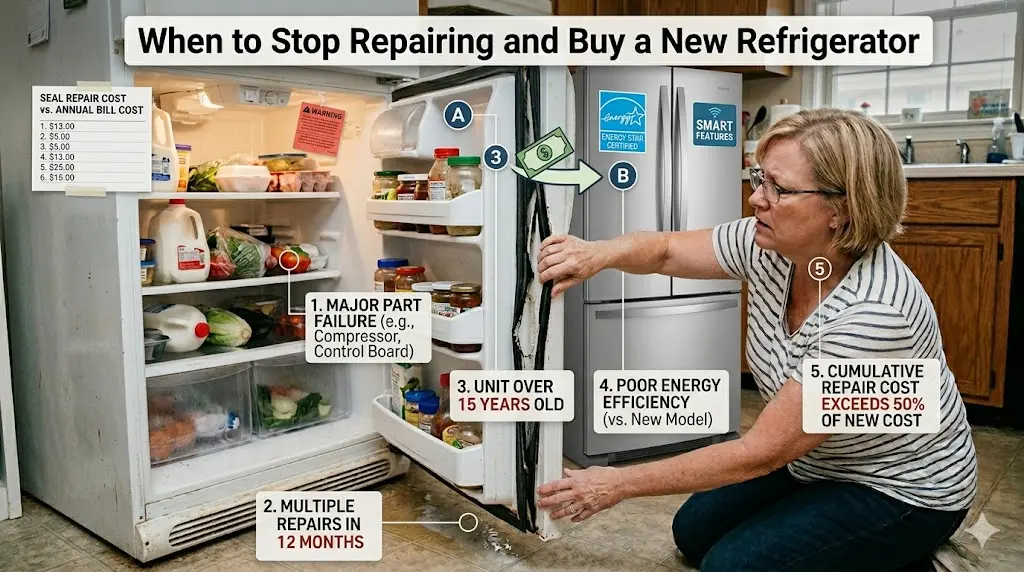
When to Stop Repairing and Buy a New Refrigerator
A gasket replacement makes sense when the refrigerator is otherwise working well. But consider replacement when:
- The refrigerator is more than 12 to 15 years old
- You’ve already had major repairs (compressor, control board, sealed system) in the past 2 years
- The cost of gasket plus hinge repair exceeds $200 on an older unit
- The refrigerator isn’t maintaining temperature even with a fresh gasket
A new refrigerator with an Energy Star rating will typically save $50 to $100 per year in electricity compared to a 15-year-old model — a meaningful figure on any Texas utility bill.
Frequently Asked Questions
How long do refrigerator door gaskets last?
Most gaskets last 8 to 12 years under normal use. In Abilene’s heat, especially if the fridge is in a garage or utility room, expect 6 to 10 years before the rubber begins to harden or crack.
Can I fix a refrigerator door seal without replacing it?
Sometimes. Cleaning thoroughly, reshaping a warped gasket with gentle heat, or applying petroleum jelly can restore function if the gasket isn’t torn or severely hardened. If those fixes don’t pass the dollar bill test, replacement is the better long-term solution.
How much does refrigerator door seal repair cost in Abilene, TX?
A DIY gasket replacement costs $20 to $80 in parts. Professional repair — including diagnosis, parts, and labor — typically runs $120 to $250 in the Abilene area depending on brand and model complexity.
Is it safe to use a refrigerator with a bad door seal?
Short-term, yes. Long-term, no. Food in the affected areas — particularly door shelves — may not stay consistently below 40°F, which increases spoilage risk. Running the compressor constantly also shortens appliance life. Address it within a week or two.
Why does my refrigerator door seal feel fine but still not seal properly?
The gasket may look and feel fine but have flattened spots that don’t create contact. Use the dollar bill test to identify exact problem locations. The issue could also be door misalignment rather than the gasket itself.
How do I stop mold from growing on my refrigerator door seal?
Clean monthly with warm soapy water. For existing mold, a solution of one tablespoon of baking soda in a quart of water works well without damaging the rubber. Dry completely after cleaning. Petroleum jelly applied after cleaning inhibits future mold growth.
Will a bad refrigerator seal affect the freezer too?
If the fridge door seal is failing, warm, humid air enters the refrigerator compartment. On models with shared airflow between the fridge and freezer, this can cause frost buildup in the freezer. On separate sealed systems, the effect is more limited but still possible.
Conclusion
A refrigerator door that won’t seal properly is a problem that gets worse, and more expensive, the longer you wait. In Abilene’s climate, the combination of heat, dust, and temperature swings accelerates wear on door gaskets faster than the national average. The encouraging reality is that in most cases — dirty gasket, warped rubber, minor misalignment — you can resolve this yourself in an afternoon for under $50.
If the issue turns out to be hinge damage, structural door warping, or something more involved, a qualified local appliance repair technician can typically diagnose and fix the problem in a single visit. Getting a professional opinion sooner rather than later almost always costs less than waiting until the compressor gives out.
Need a Refrigerator Repair Pro in Abilene, TX?
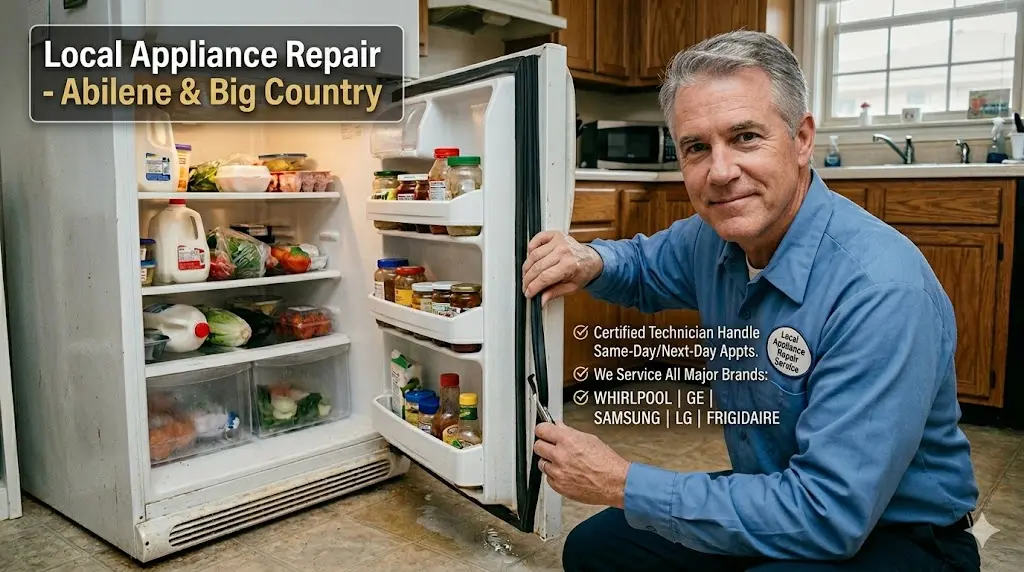
If your refrigerator door still won’t seal after trying these fixes, or you’d rather have a certified technician handle it the right way the first time, our local appliance repair service covers Abilene and the surrounding Big Country area.
We service all major brands — Whirlpool, GE, Samsung, LG, Frigidaire, and more.
Same-day and next-day appointments available.
Call us today (325) 238-9044 or fill out our quick contact form to schedule your repair. Most door seal and gasket issues are resolved in a single visit.